About us

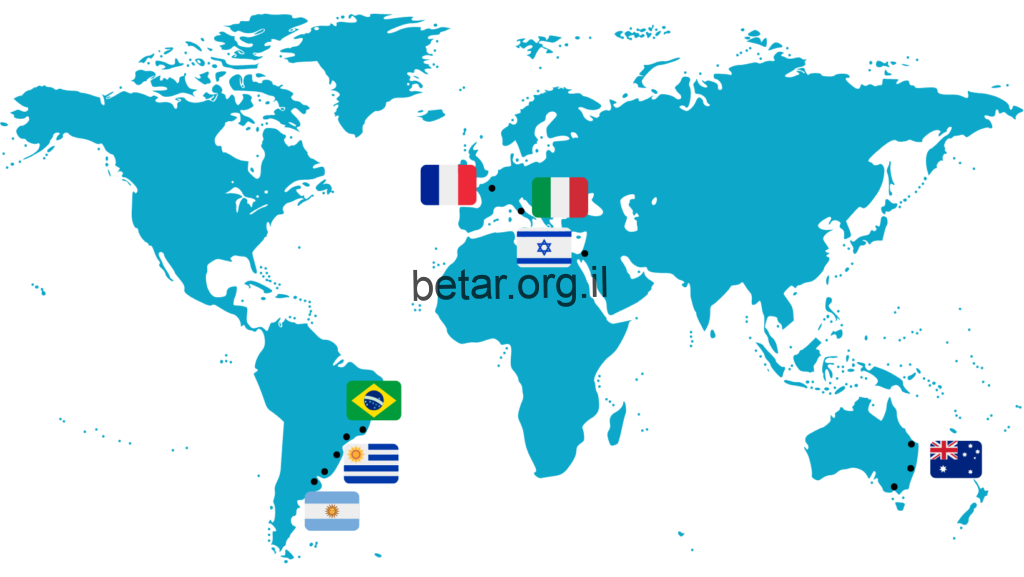
The Betar Movement is a world Zionist youth movement founded 85 years ago by Ze'ev Jabotinsky. Betar members played important roles in the creation of Israel. Today the Betar Movement is active in many world branches and is involved in Jewish and Zionist activism.

Betar Newsletter

Subscribe to our email newsletter!


Betar Latest Updates
Betar South Africa rises

Thursday 13 December was a very important date for Betar South Africa. It saw the official welcome of the movement’s newly arrived shaliach, Ori Leizer. A large group of Betarim and members of Likud SA were in attendance to welcome Shaliach Ori.

Some of these guests had been involved in Betar from the 1930’s. We were also fortunate to have Avrom Krengel and Isla Feldman representing the South African Zionist Federation present.

The Beyachad boardroom was filled with treasured memories as Betarim exchanged camp and Betar stories. Many of the attendees had been roshim and heads of the movement. There was a great feeling of unity and strength.

At the start of the evening’s proceedings, Shaliach Ori walked in to the song ‘Shtei Gadot Layarden’ accompanied by Betar madrichim Nicole Giessing and Jonathan Croock carrying the Betar and Israeli Flags.

The audience stood to attention while the Betar and Likud song ‘Shir Betar’ was sung with most present joining in the singing.

A video presentation displaying photos from Betar camps dating from the 1940’s onwards was then shown. Many of the Betarim in the audience identified themselves in the photos causing much excitement.

Click here to read the full article

And check Betar SA facebook page

 
Betar’s House Warming
  
Nearly 100 Betarim, parents, friends, Zionist youth movement members and Sydney Jewish community leaders have celebrated the opening of the new Betar NSW Maoz at White City, Paddington.

The communal event included a jumping-castle and other fun activities for kids and a Kosher BBQ for all.  Mementos of previous Betar functions were displayed including camp-shirts and hundreds of photos covering decades of activities and camps.  The Betar senior library was formally re-established with a donation of several books on Betar history and philosophy, including two books on Betar’s largely unknown but pre-eminent role in the Warsaw Ghetto Uprising.
 
The festive atmosphere was enhanced by having other Zionist youth movements showing their support.  Toward the end of the day, following a Betar Tekes (ceremony), Betar teamed up against Hineny youth in a thrilling soccer match on the Betar Mao”z grounds.
 
Betar NSW is now running ongoing activities every second Sunday at the new Mao”z, and is looking forward with excitement to the coming winter camp – Machane Keter-David (David’s Crown).  David’s Crown represents our own pride and responsibilities as descendants of the Jewish nation.
To join Betar NSW, or participate in Betar activities, please contact Tiffany Davis at NSW@betar.org.au.  Betar Australia can be found on the web at www.betar.org.au
If you would like to help toward Betar’s future as a past member or friend of Betar in Australia, you can contact the Betar Parents and Friends in Sydney at PNFNSW@betar.org.au  or in Melbourne at PNFVIC@betar.org.au
 
Betar NSW would like to thank:
·         Hakoah club;
·         North shore synagogue and Wizo NSW for their wonderful support and on-going co-operation;
·         Bunnings for its generous donation of the Betar barbecue, tables and chairs;
·         All who contributed to the effort of getting Betar NSW into its new home.
 

Source:j-wire.com 

 
Betarim at the Menachem Begin Marathon
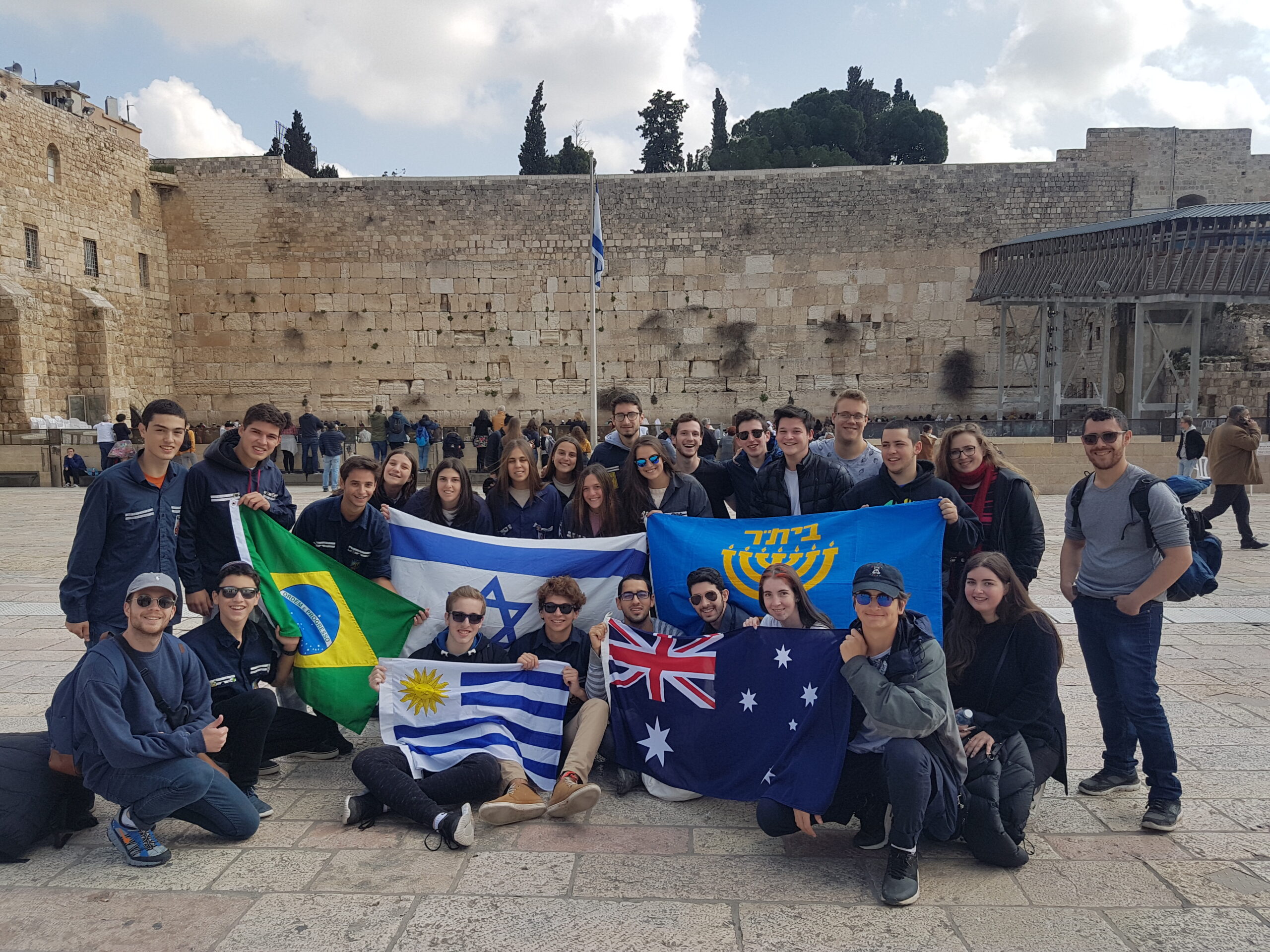
Betarim of the "Shnat Betar" program enjoyed the Menachem Begin marathon held in Jerusalem


UN vote more a short circuit than short cut

Philip Chester
From: The Australian

September 23, 2011 12:00AM

http://www.theaustralian.com.au/news/world/un-vote-more-a-short-circuit-than-short-cut/story-e6frg6ux-1226143923123

THE two-state solution, with Israel and Palestine existing peacefully alongside each other, is the stated policy of the Israeli government, the desire of the overwhelming majority of Israeli citizens and the preferred outcome of the global political community.

It is predicated on a vision of two peoples living side by side, in mutual recognition, respect and security. This vision, when fulfilled, will result not only in the peace that has been dreamed of for so long, but also in increased economic prosperity on both sides.

So why is the Palestinian plan for a unilateral declaration of independence, to be proposed to the UN General Assembly, so inherently wrong?

The unilateral nature of the declaration is the issue. Unilateral, by definition, precludes negotiations. In fact, it provides a perfect excuse for not entering into negotiations with Israel now or at any later date.

Israel has been and remains committed to a negotiated solution. Various Israeli prime ministers have offered far reaching concessions that would be painful to many Israelis and involve difficult dislocations of whole communities from West Bank towns. Since 2000, prime ministers Ehud Barak and Ehud Olmert have each offered 95 per cent of the West Bank to the Palestinians, however, tragically, both offers were met not just with outright rejection but with suicide bombings and violent attacks on Israeli citizens.

Israel granted self-governance to the Palestinians in Gaza in 2005 and every Israeli resident was removed from their home by the Israeli army. The response to this removal was the election of the terrorist Hamas government and the firing of more than 6000 missiles from Gaza into Israeli neighbourhoods. While Israel has repeatedly stated its willingness to return to negotiations without any preconditions, the Palestinian leadership has repeatedly refused, forever moving the goalposts on preconditions.

Key to any deal must be Palestinian recognition of the Jewish state, the end of all claims, an end to violence and a pledge that the Palestinian refugee problem will be resolved within the state of Palestine, just as Israel solved the plight of 700,000 Jewish refugees from Arab states who were forced out of their homes because of the conflict. Just as the Palestinians seek to have a state in which they can assert their identity, so must they recognise the Jewish identity of the state of Israel.

What do the Palestinians expect to gain by approaching the UN General Assembly? The assembly has no power to grant statehood. That power is reserved for the Security Council and it is clear the Security Council will either fail to pass a resolution or it will be vetoed by the US, as reiterated by President Barack Obama - a vocal proponent of a two-state solution.

The thorny issues will remain as unresolved the day after the UN vote as they were the day before. The disconnect between the declaration and reality may very well lead to frustration, misunderstanding and violence.

It is neither reasonable nor realistic to expect that after the UN vote, Israel would vacate the West Bank and East Jerusalem without negotiated agreements on complex issues such as borders, the use of natural resources, security arrangements and access to holy sites. One wonders if this approach by the Palestinian Authority to the UN is designed to force Israel to bow to international pressure rather than genuine state building.

Opposition to the declaration comes from Israel as well as from Western leaders including Obama, who stated in his May address: "Symbolic actions to isolate Israel at the UN in September won't create an independent state."

Canada's Prime Minister, Stephen Harper, said a unilateral declaration of statehood by the Palestinians would be "a very unhelpful development". European leaders have opposed the unilateral declaration. Italian prime minister PM Silvio Berlusconi said: "We don't think a unilateral resolution can help advance peace, not by Palestinians or by Israelis. The way to advance peace is via negotiations."

It is hoped Australia, a respected voice in global affairs, will continue its support for a negotiated two-state solution by opposing this resolution.

In this context, it is interesting to recall the UN's role in the original proposal for a two-state solution. In 1947, the UN voted for a partition plan, creating a Jewish and an Arab state side by side. Despite the fact the resolution gave the Jewish state far less than it had been promised over the preceding years, the Jewish community accepted the decision with dancing on the streets. The Arab world, however, unanimously and violently rejected it, and launched a concerted attack on the nascent state of Israel (the first of four wars of attempted annihilation).

An assembly vote to recognise a Palestinian state without negotiations will undermine UN Security Council resolutions 242, 338 and 1850, the Oslo Accords, the Roadmap for Peace, statements by the quartet and other agreements, all of which call for bilateral, mutually negotiated resolutions.

A negotiated process towards a two-state solution will not be easy. It cannot be achieved in one fell swoop in the assembly. It will require difficult compromise, mutual recognition and a commitment by Palestinians that the establishment of their state will mark the end of the conflict.

Resolution of this conflict cannot be achieved by declarations. The UN declaration, while attempting to short-cut the process, will do no more than short-circuit it.

Philip Chester is president of the Zionist Federation of Australia.

 
<< Start < Prev 1 2 3 4 5 6 7 8 9 10 Next > End >>

Web-mastered and created by Yaniv Reginiano.   Copyright 2013- Betar - World Zionist youth movement.